
How Much Do Teachers Spend on School Supplies in 2025?
In Spring 2025, AdoptAClassroom.org surveyed thousands of teachers across the U.S. to find out what it really takes to run a classroom today. The results paint a powerful picture of a profession stretched thin and what it takes for teachers to show up for their students every day. From inflation to shifting education policies, this year’s findings reveal the true cost of teaching—and what’s at stake if support continues to fall short. Below are our findings.
Key Takeaways from the AdoptAClassroom.org National Teacher Survey
What Is the Real Cost to Teachers?
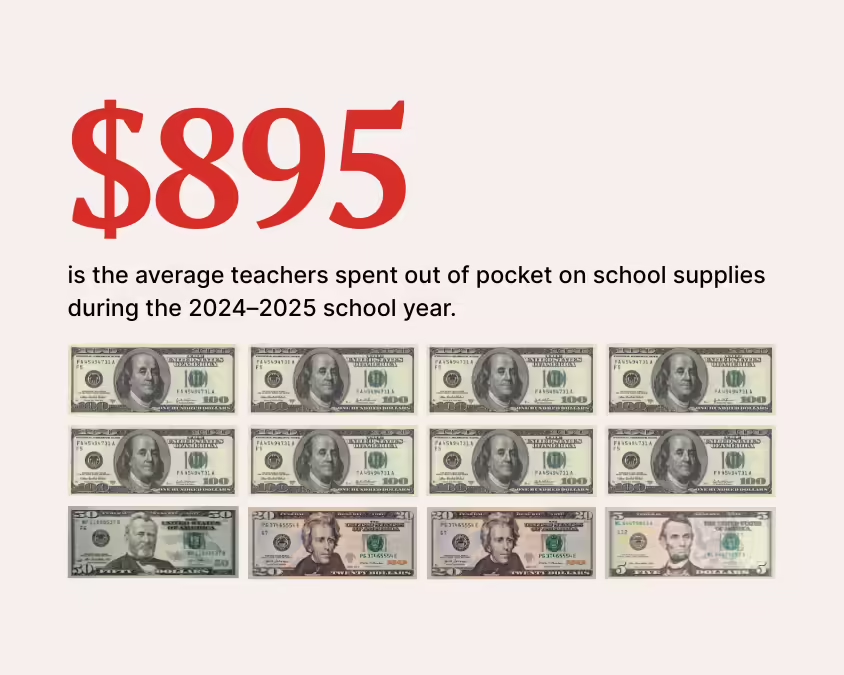
Since 2015, teachers’ personal investments in their classrooms have climbed steeply — from $600 to $895 per year, a 49% increase in just a decade. They’re compelled by the widespread need they see among their students.
More than 93% of teachers stated they have students whose families cannot afford all the necessary school supplies (AdoptAClassroom.org 2026 Teacher Impact Survey).
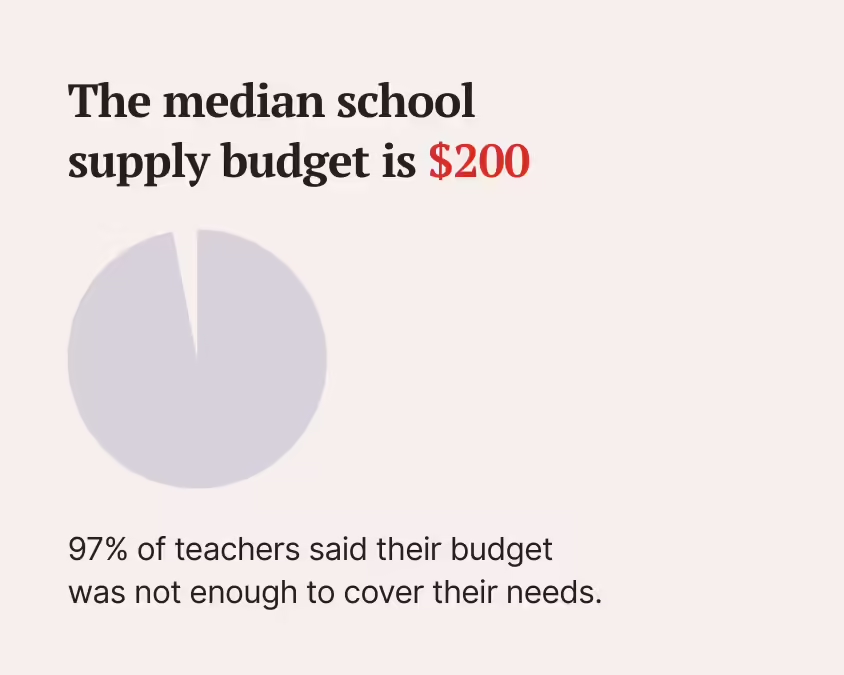
While the median school supply budget remains a modest $200, nearly 97% of educators report it doesn’t stretch far enough to meet their students’ needs.
“I spend between $700 and $1,000 a year on supplies from August to June,” says Sherry, a preschool teacher in Greensboro, NC who reflects the strain many teachers feel when supporting underserved learners. “Due to rising costs, I will not have the usual resources I need to help children adapt and extend learning.”
Which Supplies Do Teachers Need the Most?
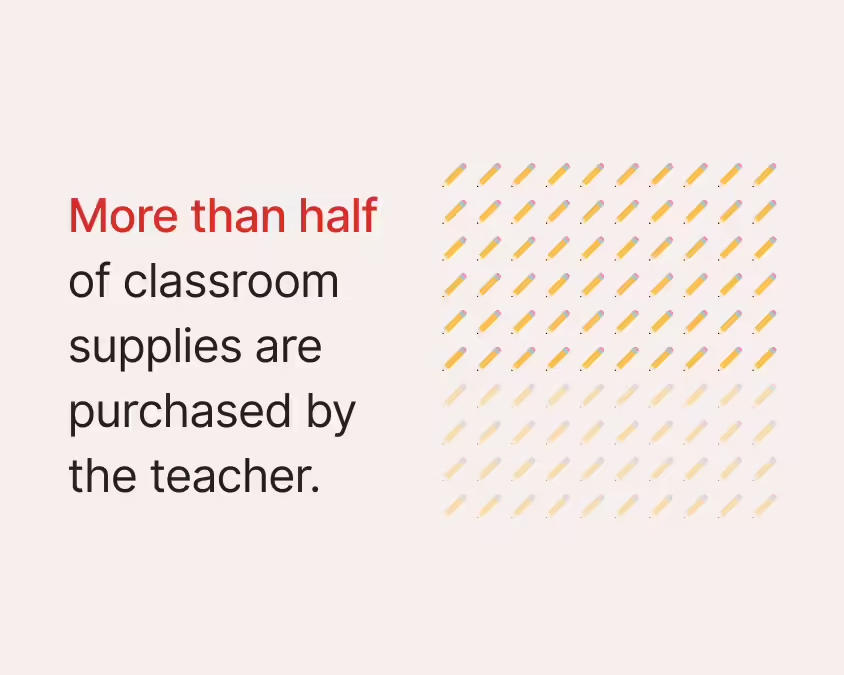
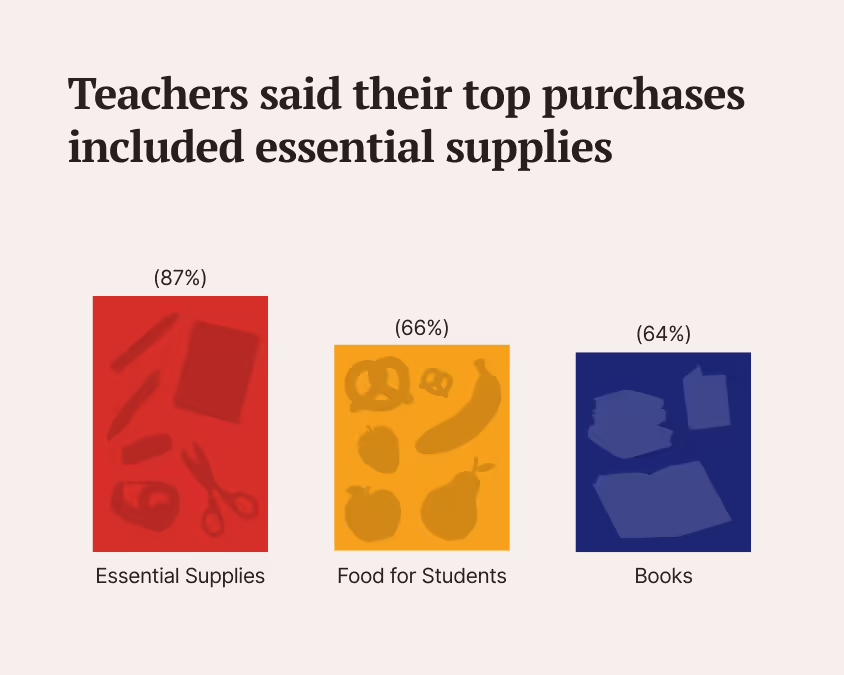
When asked what they purchase, 82% of teachers named essential supplies (paper, pencils, markers), followed by 66% who buy food for students, and 64% who invest in books and inclusive materials. More than half of all classroom supplies are purchased by the teacher.
“I have purchased a variety of items for my students to support their learning and create an engaging environment. This includes notebooks, highlighters, dry erase markers, classroom decorations, headphones, and educational subscriptions. I also provide materials for creative projects, such as scrapbooks and craft supplies,” shares Sherise, a special education teacher in New York, New York.
“Funding is already hard to come by. Between education funding cuts and inflation, I worry about my students being able to access materials that are necessary for their education,” explains Alicia, a technology teacher in Santa Fe, New Mexico. “My families often donate supplies to our makerspace classroom. I also purchase supplies for my students when need be. I don’t know how sustainable that may be in coming years.”
These teacher stats highlight the scope of classroom equity challenges and the real sacrifices educators make to ensure all students have the resources and supplies they need.
Teacher Demographics in 2025
“AdoptAClassroom.org helps level the playing field for classrooms in under-resourced schools, reducing the burden on teachers who often spend their own money to provide for students,” notes first-grade teacher Koral in Phoenix, Arizona.
Understanding these teacher statistics is vital for parents, donors, and policymakers aiming to improve teacher retention and student success nationwide.
Teacher Spending By State
2024-2025 School Year
Behind the Numbers: How We Collected the Data
Behind the Numbers: How We Collected the Data
From Data to Impact
Want to help build classroom equity and reduce out-of-pocket classroom costs?
Share these results with your local education decision-makers.Together, we can ensure every teacher has the resources they need—and every student has the opportunity to succeed.