
Welcoming migrant, refugee and other newcomer students into your classroom can make it a more vibrant, welcoming space for everyone. As an elementary school principal in Illinois explains: “Newcomer students arrive with incredible resilience, diverse cultural backgrounds and often a wealth of prior knowledge and skills, even if it’s not in English or presented in a way we immediately recognize.”
Creating a system tailored to newcomer students’ unique strengths and needs requires a lot of resources. Unfortunately, most districts’ budgets are stretched thin. That’s where we stepped in.
In partnership with The Belron Ronnie Lubner Charitable Foundation, AdoptAClassroom.org provided 15 elementary schools with a $10,000 grant each to help them meet the needs of their newcomer students.
Here are a few of the greatest lessons our grant recipients learned from this experience. They’ll be helpful to any teacher serving newcomer students.
1) Evaluate every newcomer student’s needs individually.
Every student has unique learning needs, and newcomers are no exception. When a newcomer student joins your classroom, get a clear idea of their current needs by:
Creating opportunities for newcomer students and their families to identify their own needs is particularly important for building trust. According to the principal, kids in Illinois were “in awe of being able to make decisions about their own needs and seeing their ideas materialize into resources they could use” after attending focus groups hosted by their school staff.
No matter what supplies your students need to succeed, AdoptAClassroom.org gives teachers the flexibility to meet them where they are. Register or log in to fundraise for your classroom, or explore our teacher funding opportunities.
2) Build a sense of belonging in the classroom.
Embracing newcomer students and incorporating their culture into the classroom can benefit every student’s learning. An easy way to start exploring your new students’ cultures is to incorporate relevant books and bilingual literacy items into the classroom.
The AdoptAClassroom.org Marketplace features a variety of supply options that feature diverse cultures. Check out our blog for some classroom supplies highlighting Hispanic and Asian American and Pacific Islander (AAPI) heritages, as well as Black history and culture.
3) Create low-pressure learning opportunities with differentiated instruction, small groups and educational games.
At a school in Texas, teachers noticed that some newcomer students would sit quietly and pretend to read, rather than ask for help. To help their students build confidence, the school focused its grant funds on building foundational literacy skills in low-stakes settings.
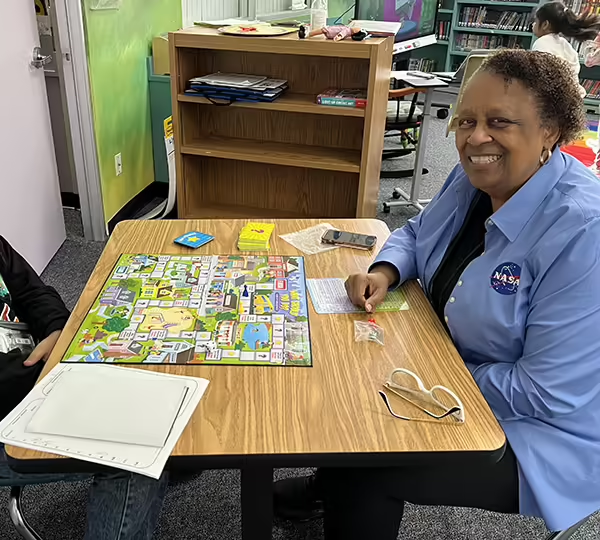
They learned that small groups based on students’ language and literacy needs allow newcomer students to practice language skills while having fun with their classmates. Educational games also help students learn without stress.
Log in and search the AdoptAClassroom Marketplace to find fun and educational supply options for your newcomer students, like:
4) Make it a team effort.
Supporting newcomers shouldn’t fall on one teacher alone. Collaborate with other teachers, school staff or other qualified adults who can help provide support to newcomer students throughout the day.
One elementary school in Texas used its grant to fund resources for a mentoring program where community volunteers (supported by staff) provide 1:1 assistance to newcomer students throughout the day.
The result? Newcomer students’ test scores and confidence levels have both improved. Spring assessments showed nearly every newcomer student increased at least one proficiency level in all four language domains.
5) Be flexible!
Even the most well-planned strategy may need to adapt to the unexpected arrival of new students mid-school year. Don’t be afraid to adapt your plans and activities to better fit your students’ needs.
Use resources like online learning software designed to adjust to students’ individual learning paces and make it easier to adapt content on the fly.
Please note: AdoptAClassroom.org is sharing these resources with the intent to spread awareness and promote conversation among educators. Sharing a resource is not an endorsement of the resource for classroom use or an endorsement of any opinion the resource creator may hold. Educators are the experts on their students’ needs and their school’s policies. Please always be mindful if a resource is a good fit for your classroom.
The Belron Ronnie Lubner Charitable Foundation (BRLCF) was launched in 2020 and is named in honour of former Belron CEO, Ronnie Lubner, who strongly believed in the company’s responsibility to give back to society. The BRLCF is funded by members of Belron’s senior leadership.